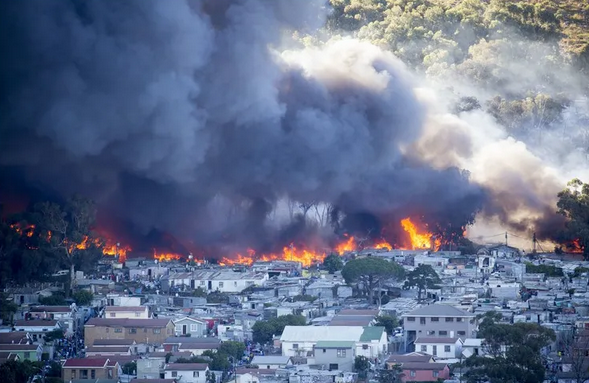
A raging fire tore through informal settlements in Cape Town overnight, leaving more than 500 residents homeless and sparking urgent calls for housing reform. The blaze, which broke out in Imizamo Yethu before spreading to Masiphumelele, destroyed dozens of shacks and forced families to flee with only the clothes on their backs.
Residents described scenes of panic as flames engulfed homes in minutes. “We grabbed the children and ran. There was no time to save anything,” said mother of three, Zanele Mkhize. Others spoke of neighbours desperately trying to douse the flames with buckets of water, but the fire spread too quickly. Authorities suspect faulty wiring or illegal electricity connections may have sparked the blaze, though investigations are ongoing.
Firefighters battled for hours to contain the inferno, but strong winds made their task nearly impossible. By dawn, the settlements lay in ruins, with smoke still rising from charred remains.
Relief organisations rushed to provide food, blankets, and temporary shelter. The City of Cape Town confirmed that emergency housing would be made available, but residents expressed frustration at the cycle of destruction. “Every year we face fires. Every year we lose everything. When will government give us proper housing?” asked community leader Thabo Dlamini.
The incident has reignited debate about South Africa’s housing crisis. Informal settlements, home to thousands, remain vulnerable to fires, floods, and crime. Activists argue that government’s failure to deliver safe housing perpetuates inequality. “This is not just a fire. It is a symptom of a broken system,” said housing activist Mandisa Khanyile.
Economists warn that repeated disasters drain resources and deepen poverty. Families who lose homes often struggle to rebuild, while children miss school and breadwinners lose jobs. The ripple effects extend far beyond the immediate tragedy.
Politicians have promised action. Western Cape Premier Alan Winde pledged to prioritise housing upgrades, while Human Settlements Minister Mmamoloko Kubayi said national government would assist. Yet residents remain sceptical, pointing to years of unfulfilled promises.
For now, survivors face the daunting task of rebuilding their lives. Aid groups continue to collect donations, but many say only long‑term solutions will prevent future tragedies.

Follow Us on Twitter